Silence as Retaliation: Disability, Retraction, and Institutional Quiet at ISED
1. Introduction: The Sound of Retaliatory Silence
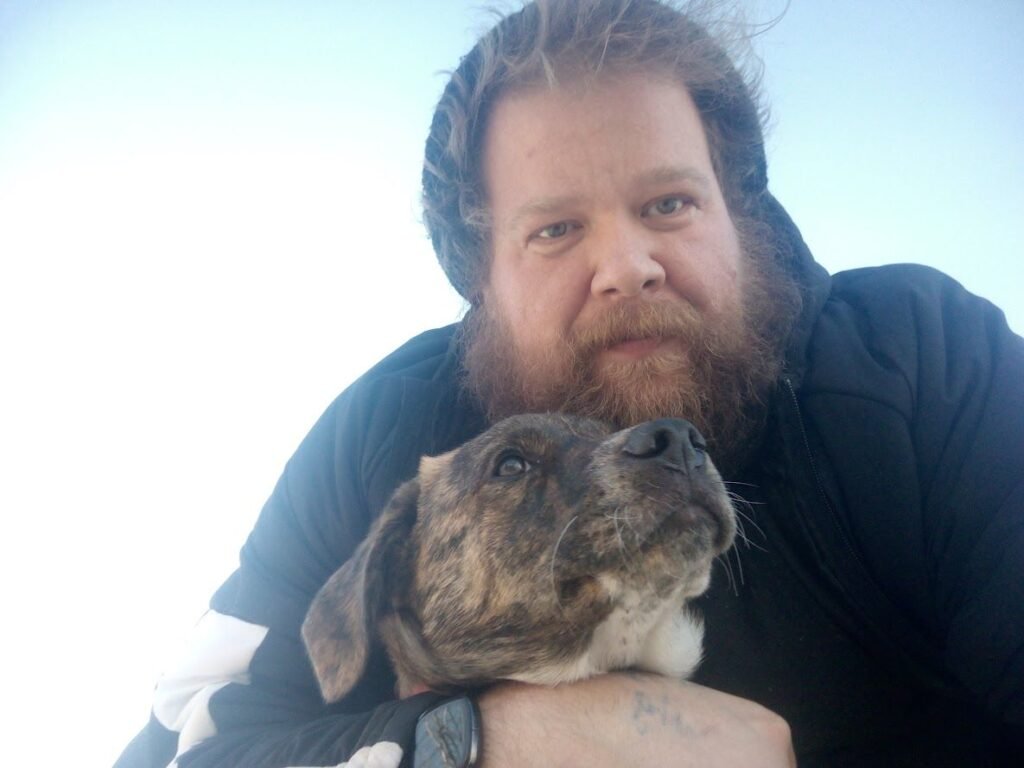
“We’ve known each other a long time,” says Kevin Duska, leaning back with the weary clarity of someone who’s had to narrate his own methods more times than he can count. “I’m an old hand—and you know I’m just a dude with a dog who doesn’t think government should spy on its own fucking citizens.”
It’s a line that cuts through the bureaucratic fog with surgical precision. In a political culture increasingly reliant on procedural language to silence dissent and reframe disability as difficulty, the human stakes are easy to miss—unless you happen to be the human in question.
On May 30, 2025, Innovation, Science and Economic Development Canada (ISED) filed a sweeping application under Section 6.1(1) of the Access to Information Act. The goal? To shut down 126 access to information requests filed by Duska—many of which centered on ISED’s own narrative manipulation, internal surveillance culture, and refusals to accommodate a known visual impairment. Their stated rationale: the requests were “vexatious,” burdensome, even abusive. The evidence presented: a collection of selectively quoted ATIP queries and bureaucratic clarifications—none of which acknowledged the structural accessibility failures that triggered much of the alleged burden in the first place.
But within hours of ISED’s application hitting the Office of the Information Commissioner, Duska had already withdrawn or substantively modified over 80% of the requests at issue, including those ISED cited most forcefully. He did so before the OIC had even acknowledged the file. He did so without being asked. And he did so while incurring legal and research costs to ensure procedural integrity and disability assistance.
This isn’t requester vexation. This is institutional retaliation.
This article is not about paperwork. It’s about power. And the lengths to which a federal department will go to bury not just the request—but the requester.
II. A Gesture of Good Faith: Strategic Reductions, Not Retreat
On May 30 and 31, 2025, Kevin Duska — President of Prime Rogue Inc. — formally withdrew, revised, or conditionally merged more than 80% of the 126 ATIP requests targeted in Innovation, Science and Economic Development Canada’s (ISED) surprise Section 6.1(1) application to the Office of the Information Commissioner (OIC). That application, filed late on a Friday afternoon without prior engagement, accused Duska of abuse of process and attempted to shut down ongoing inquiries en masse.
“They filed it like I wouldn’t respond, or that they’d get me to freak out” Duska reflects. “It’s funny because, aside from the three pertaining to disability requests, they had never asked me to withdraw any of these. They simply assumed I would not. By the time they showed up to the fight, I’d already withdrawn most of the battlefield. I honestly thought that it was cheap, pathetic, and disingenuous. They’re weaponizing disability and their own ethical failures in an application that reflects the fact that they didn’t even try to clarify the request in the first place. I mistakenly thought they were were acting in good faith like I am. Now they’ve chosen to play stupid games and to win stupid prizes.”
In total, 67 requests were outright withdrawn, 7 more conditionally withdrawn, and 30 substantially revised — all within 24 hours of ISED’s move to block them. The result was a dramatic reorientation of the file landscape, reducing volume by over two-thirds while preserving core strategic concerns tied to federal surveillance behavior, algorithmic information control, and institutional psychology within the ATIP regime.
These withdrawals were not done hastily or begrudgingly. They came in the form of a detailed email addressed to the ATIP office, the Information Commissioner, and both named ISED officials on the application — Anik Meredith and Maria Perocchio. That message emphasized the efforts were made “without prejudice and in a clear spirit of good faith,” while citing Duska’s visual impairment (amblyopia) and the need for accommodation-based adjustments to his request tracking systems.
“This wasn’t a climbdown,” he notes. “It was the clean, surgical act of someone who still believes that access matters — even when it hurts. “If they had recommended I withdraw any of these with an actual rationale, I probably would have done so. I had explicitly noted in what was clearly a bad faith clarification request on their part, that I was willing to exclude any of the directorates they forced me to choose should they provide a rationale.. I was already on the verge of no longer trusting them, and was aware that the request was voluminous but to claim vexation, that’s patently absurd. So, yeah, I withdraw a bunch of the less urgent ones, albeit in direct contravention of my democratic rights, because they’re now forced more urgent procedural matters onto me. They even included vague language about harassment — which, frankly, is projection. I’ve never done anything like that. But the fact that they would float it at all is disturbing.
What followed was silence. No acknowledgment, no update to ISED’s application, no public withdrawal. In legal terms, ISED’s filing is now built on a procedurally outdated foundation. In human terms, it stands as a bureaucratic accusation left untouched by the facts that dismantle it.
“At some point, you have to ask: if they’re not correcting the record, what are they really protecting?”
For Duska, the answer is clear. The goal was never efficiency. The goal was control — and the moment that control was lost, ISED froze.
“You don’t do this to save time,” he adds. “You do this to send a message. I just happened to send mine back faster.”
III. The Sound of Silence: A Department Frozen in Its Own Narrative
As of publication, ISED has not amended, withdrawn, or publicly responded to its Section 6.1(1) application, despite having been informed that over 70% of the access requests it sought to strike had already been either withdrawn or substantively narrowed.
The department’s silence is not simply bureaucratic—it’s strategic. And that silence speaks volumes.
“They weren’t prepared for someone to respond faster than they could regroup,” said Kevin J.S. Duska Jr., the subject of the 6.1(1) application and president of Prime Rogue Inc. “I withdrew or modified over a hundred files before they even formally acknowledged the complaint existed. That was a gesture of good faith. What came back? Nothing.”
This institutional silence stands in stark contrast to the law’s design. Section 6.1(1) is not a tool of convenience—it’s a remedy of last resort, meant to prevent abuse, not to suppress investigation. When wielded carelessly or preemptively, it can become an instrument of narrative control rather than administrative necessity. In this specific case, ISED invoked Section 6.1(1) without actually asking the requester to withdraw any of them.
During my PhD, I took a seminar on Carl Schmitt, a very controversial legal scholar from Nazi Germany, whose work provides really interesting unintended takes on democracy and its suspension. He wrote that “sovereign is he who decides upon the exception.” The more I deal with the FOI/ATI regime, the more I recognize that some bureaucrats are attempting to make the exception permanent,” Duska states.
And in this case, the exception that ISED attempted to cement was both misleading and dangerous.
Among the files cited as “vexatious” in ISED’s complaint was a request concerning mental health impacts on ATIP officers—an inquiry Duska says was entirely legitimate and sincerely motivated.
“That request wasn’t adversarial,” he explains. “It came from a place of curiosity. I study emotional labour in governance. I know that ATIP work involves emotional strain—navigating redactions, managing scrutiny, fielding sensitive content, being bitched at by requesters – something I’ve ironically never done. That’s not just clerical; it’s psychological.”
The request—filed weeks earlier—asked whether the department had ever documented the mental health impacts of processing high volumes of requests, or difficult interactions with requesters. But on May 13, 2025, ISED’s own Director of ATIP, Anik Meredith, contacted Duska directly and informed him that his volume of requests was causing “duress.”
“I was shocked, honestly,” Duska recalls. “That was the first time they used that term. And when they later asked me to clarify the scope of my original request, I naturally incorporated it. If duress was on the record, I had every right to ask whether it had been formally documented.”
That’s where the retaliation frame takes hold.
Rather than engage with the clarified request or provide a transparent response about the workplace pressures it had invoked, ISED reframed Duska’s inquiry as an act of psychological manipulation—alleging he was seeking information to target staff or provoke distress.
“It’s Kafkaesque,” he says. “They made an unsolicited comment about being under strain. I followed up to ask if that strain was ever officially recorded. And then they turned around and accused me of weaponizing that clarification.”
It is here, perhaps more than anywhere, that the failure of ISED’s process becomes undeniable. The institution cannot have it both ways: either duress exists and warrants inquiry—or it does not, and should not have been mentioned. Either way, punishing a requestor for clarifying based on an institution’s own language is the definition of bad faith.
The pattern repeated itself elsewhere. Numerous “clarification” logs cited in the 6.1(1) application show formulaic, vague, and often inaccessible follow-ups, asking only which “sector” might hold the information or suggesting, only in relation to disability accommodations, that the request be abandoned altogether. There was no substantive engagement, no real effort to co-produce clarity with a disabled requester who had explicitly flagged the need for accommodations.
“They say I didn’t clarify,” Duska says. “But their clarification attempts failed to meet even a basic standard of accessibility. I’m legally blind in my right eye. They knew that. Most of their communications were never structured in a way I could meaningfully engage with.”
According to Section 4(2.1) of the Access to Information Act, institutions have a statutory duty to assist requesters, particularly when disability is on the record. That duty includes helping to clarify requests in good faith—and in forms accessible to the individual making them.
Instead, ISED inverted that obligation—turning its own failures to engage into a case for silencing the applicant entirely.
And now, having received not just one but multiple communications confirming over 100 withdrawn or clarified requests, the department has chosen not to respond.
“This is a department that said it was drowning,” Duska said. “And when I drained the flood, they still tried to build an ark.”
By remaining silent, ISED has made clear that its filing was never about caseload. It was about control—about removing a politically inconvenient critic under the guise of procedural burden.
“I’ve worked in the intelligence community for over a decade,” Duska says. “If this were happening abroad, we’d call it information suppression. But because it’s Canada, we call it clerical fatigue.”
IV. Retaliation by Any Other Name — Framing Disability as Disruption
By May 2025, Kevin Duska had already been engaged in two months of high-volume investigative requests examining ISED’s internal communications infrastructure, psychological threat modeling, and behavioral response strategies after some of his personal information was subjected to internal circulation and mockery- as he discovered via one of the Privacy Act requests he is now being impugned for. But behind the barrage of request identifiers and bureaucratic clarifications was something else: a person with a visual impairment navigating an inaccessible system that made no effort to accommodate the way he works.
“We spent a lot of hours in the same office,” Duska says, referencing his own OSINT and metadata workflows. “Have you ever seen how close I get to the screen when I’m analyzing server logs? When I’m watching for misdirection, nesting behaviors, or timestamp drift in recursive communications? I lean in—literally. That’s what amblyopia looks like in real-time.”
Despite declaring his disability and requesting accessible formats, ISED sent him clarification spreadsheets built in Excel—formats notoriously unfriendly to screen readers, visual tracking, and adaptive interpretation.
“How the hell was I supposed to respond to 100 clarification requests scattered in Excel? That format is the definition of visual hostility to someone with my condition,” he explains. “I’ve been blind in my right eye since I was a kid. And the people responding to me from ISED had that information in front of them. They knew. And they still did it. ”
The clarification process became a turning point. Instead of engaging with accommodation requests, the department’s silence calcified. Anik Meredith, the acting Director of ATIP, was the one who sent the inaccessible Excel sheet. According to Duska, that decision alone was telling:
“If a director-level official thinks that’s acceptable—if a director responds to a disability by making the process harder—then I’m left with one of three conclusions. Either this was a deliberate setup (coup monté), a form of purposeful retaliation, or that they have a negative amount of literacy when it comes to the basic concept of accessibility.”
The irony? Meredith herself had previously told Duska his requests were causing “duress” to ISED staff—language he later used to amend one of his requests to ask about the mental health toll of high-volume ATIP work.
“I didn’t make that up. They introduced the term. They mentioned duress. So when clarification was requested, I updated my file to ask whether there were records of that. Because emotional labour matters. I know that better than most—it’s part of my research.”
And yet, when ISED filed its application under Section 6.1(1), it accused Duska of deploying “weaponized transparency”—of using the ATIP regime to harm staff, rather than to hold the institution accountable. The very concept of mental health impact, introduced by ISED, was used as a weapon against the person who first acknowledged its legitimacy – against a man who has suffered from diagnosed anxiety and panic disorder for 22 years, and who was recently diagnosed with high-functioning ADHD at age 39.
The broader legislative irony is damning. According to Section 4(2.1) of the Access to Information Act, institutions must not discriminate based on who makes the request and are required to:
“make every reasonable effort to assist the person in connection with the request, respond to the request accurately and completely and, subject to the regulations, provide timely access to the record in the format requested.”
And under Section 4(3), even if a requested record does not yet exist, if it can be produced from machine-readable files using tools already available to the institution, it must be considered within the scope of the Act:
“…any record […] that does not exist but can […] be produced from a machine readable record under the control of a government institution […] shall be deemed to be a record under the control of the government institution.”
What this means: Government departments like ISED are not permitted to dismiss or dodge a request simply because it’s inconvenient or complex. They cannot ignore formatting accommodations. They cannot hide behind vagueness when technical capacity exists.
And they certainly can’t violate the duty to assist because they don’t like who’s asking.
“They didn’t treat me as a human being with access needs. They treated me as a problem to be neutralized,” Duska says. “I’d say that’s the textbook definition of retaliation—just wrapped in bureaucracy.”
He later withdrew or revised over 80% of the contested requests, working through the night on May 30 and 31.
“I was up until 4 a.m.,” he says. “Not because they deserved it, but because I believed in the idea of good faith—even if I was the only one practicing it. The best way to lead is by example and if ISED acts like a petulant child, I’m going to take the high road.”
Despite these efforts, ISED has not acknowledged the withdrawals. It has not amended or withdrawn its application. And it has not offered a single word in response.
“This is a department that said it was drowning,” Duska says. “So I drained the flood. And they still filed a flood report.”
It’s not just procedural fatigue. It’s institutional gaslighting.
“If this were happening in Russia or China, we’d call it information suppression. But here? We call it overwork. We call it burnout. We call it clerical discretion. And we pretend that makes it okay.”
V. The Dog at the Door: Democracy and Disability
“I’ve noticed this pattern of illicit governmental surveillance – from the LinkedIn visits to the automated server probes,” Duska says near the end of our call. “It’s incredibly troubling and these are all Charter violations. Their accusation that I was weaponizing the process if spurious. I only weaponize process when dealing with hostile actors. Unfortunately, they just showed that they are hostile. If they’re trying to scare or intimidate me, which I assume they are, I can assure you that it absolutely has not worked/”
There’s something striking about that framing — a quiet fury behind the softness. You hear it in the way he pauses before the final clause. The years of accumulated skepticism, tempered by something rawer: a moral insistence that surveillance, obstruction, and bureaucratic fog are not the costs of national security. They are tools of control — and when used against a half-blind man filing records requests, they become something else entirely.
Disability is not an aesthetic. It’s not a legal footnote. It’s a lived structure — physical, cognitive, emotional — that overlays every part of a person’s interaction with power. Kevin Duska lives with amblyopia. It affects his ability to parse visual data, to process documents in inaccessible formats, to navigate systems designed with only the fully sighted in mind.
It also shapes how institutions treat him — or ignore him.
“They sent me an Excel spreadsheet,” he says, “without thinking for one second how I’d read it. No PDF, no plain text, no consultation. They didn’t ask. They didn’t care. And then they complain that I sent a separate email to respond to every request – I can’t tell this is dishonesty, stupidity or pure systemic weaponization. Regardless, it’s unacceptable.”
And this wasn’t some junior clerk. It was Anik Meredith, Acting Director of ISED ATIP. Her name is on the application to the OIC. Her name is on the spreadsheet. Her name is on the emails. If there is a signature on this institutional failure, it is hers.
That alone might be excused as oversight — if not for the context. Duska didn’t hide his disability. He referenced it in his communications. He emphasized it repeatedly. He even offered alternative processing suggestions in the interest of good faith.
None were accepted.
“I wasn’t asking for special treatment,” he tells me. “I was asking to see. That’s it. That’s the ask. Let me see what you’re doing.”
What followed was retaliation — not in the cinematic sense of slander or sabotage, but in the colder, institutionalized logic of attrition: delay, dismiss, overwhelm. Accuse the disabled researcher of abuse. Suggest he’s the reason public servants are under duress. Weaponize his disability as a rationale for your own procedural collapse.
This is not a new story. It is just a precise one.
The Personal is Structural
Disability doesn’t exist in the vacuum of the individual. It exists in relation to systems — and the system here is broken. The Access to Information Act, in its current form, requires institutions to provide records “in the format requested,” where feasible. It requires meaningful consultation where accommodations are needed. It mandates assistance, neutrality, and procedural clarity.
ISED failed on every count.
And that failure isn’t procedural — it’s political.
It reflects an institutional culture that, when met with intellectual resistance from the disabled, treats that resistance not as a contribution but as a threat. When someone like Duska — a strategic communications expert, an anti-disinformation expert, a private intelligence analyst, a visually impaired FOI researcher — enters the frame, the reaction isn’t engagement. It’s containment.
“They don’t know what to do with someone like me,” he says. “I’m autistic-coded, I’m blunt, I’ve got a trauma record, and I can clearly out-analyze their strategic planning team on two hours’ sleep and a cup of coffee. That makes me dangerous. So they’d rather disappear me procedurally.”
Instead, they made him visible. Every clarification, every denial, every act of dismissal is now documented — and countered — on record. The page is flipped. The story is changing.
And the dog? Still at the door. Still watching. Still waiting.
VI. Of Dogs, Discovery, and Democratic Disobedience
It didn’t start with provocation. It started with a notice of intent.
“We told them,” Duska explains. “We told Ms. Meredith directly — some of these requests relate to an anticipated legal claim. We made clear that not everything was tied to it, but that certain elements were crafted to obtain information of probative value. I was trying to understand the scope of internal surveillance and disability-related commentary already made about me.”
But rather than facilitate the process or engage cooperatively under Section 4(2.1)’s “duty to assist,” ISED pivoted sharply. They didn’t narrow. They suppressed.
This is no longer about redactions or processing time. It’s about whether a department, when confronted with potential liability, can use access laws not as a bridge to transparency — but as a weapon of denial.
“If you know someone is pursuing lawful discovery and you cut off the tap — how is that not retaliation? How is it not at least adjacent to obstruction of justice?”
The ATIA is not a civil discovery statute, but it’s a legally binding public information regime that serves parallel democratic and evidentiary functions. And when a department seeks to shut down access inquiries after being made aware that some are tied to legal accountability, the ethical and procedural implications are stark.
“That’s what chilled me most,” Duska adds. “It wasn’t just the rejection of access. It was the rejection of reality. As if to say: We see what you’re doing, and we’ll make sure no one else does.”
VII. The Stakes: What Happens Next
The Office of the Information Commissioner (OIC) has not yet ruled on ISED’s section 6.1(1) application. As of this writing, no formal acknowledgment has been issued — not to the institution that filed it, nor to the individual whose access rights it seeks to suspend. That silence grows heavier by the hour, as does the burden of what it implies.
“They filed 126 requests for suppression,” Duska says. “I voluntarily withdrew or modified over 80 percent — before they even acknowledged the file. I don’t know what more proof of good faith you need. They thought they were filing against a requester. What they filed against was the record. And the record’s not going anywhere.”
And yet, the risk remains.
The risk is that the OIC, overwhelmed and under-resourced, might try to quietly shelve the case. That it might allow ISED to withdraw without penalty. That it might fail to recognize the fundamental legal questions still on the table — questions about disability discrimination, about targeted administrative burden, about the use of FOI strategy as institutional gatekeeping.
“They tried to frame me as vexatious,” he continues. “But what if the real vexation is theirs? What if this whole thing is a fruit of the poisonous tree — retaliation for being too precise, too persistent, too unwilling to disappear?”
That’s why a ruling is still needed — even if ISED pulls the application.
Because this isn’t about winning a procedural skirmish. It’s about exposing a pattern.
Questions That Still Demand Answers
- Why did ISED proceed with a mass suppression application without first engaging the most basic principles of accommodation under the Accessible Canada Act or section 2.1 of the ATIA?
- Why did senior officials — including Director Anik Meredith — send inaccessible clarification tools to a known amblyope?
- Why were formal clarifications framed as “verbosity” and “disruption” rather than legitimate expressions of disability-informed communication?
- Why were internal claims of staff “duress” weaponized in an application, while simultaneous efforts by Duska to understand those effects were cited as evidence of malice?
- And finally, why has no attempt been made — even now — to publicly correct, update, or amend the flawed application in light of the over 100 modifications, withdrawals, and reductions submitted in good faith?
These questions are not rhetorical. They are procedural. They demand review.
“I didn’t file these requests to cause harm,” Duska says. “I filed them to surface it.”
Toward a Just Outcome
The request from Prime Rogue Inc. is simple. If ISED is allowed to withdraw, so be it — but the disability and retaliation claims must be adjudicated on their own merits. The OIC cannot let the matter vanish quietly into the administrative ether. To do so would be to endorse the weaponization of the system against those who use it most carefully.
There is precedent for this. There is statutory room for this. And there is certainly public interest.
This is not a story about a few FOI files. It is a story about how governments defend themselves — not against violence, but against scrutiny.
The final word, perhaps, belongs to the one who started it:
“You can try to wear me down. You can pretend not to see. But I’m still here. I still have the record. I still have the dog. And now I have the file, too.”
VII. Conclusion: “The Only Way Out Is Through”
This was never meant to become a spectacle.
It was supposed to be a test of Canada’s democratic promise — that any citizen, regardless of income, disability, or professional standing, could ask their government a question and get a straight answer. That the right of access didn’t depend on who you were, or what they thought of your motives. That transparency wasn’t conditional on how polite, deferential, or neurotypical you appeared.
Instead, this became something darker.
A federal department, notified of a pending lawsuit, moved not to engage but to shut down the inquiry entirely. Not with evidence. Not with reason. But with character attack, sealed inside a Section 6.1(1) application and framed as a matter of “burden.” The burden, it seems, was not the requests — but the scrutiny. The record. The accountability.
Even after 82% of requests were withdrawn or narrowed — some to surgical precision — there has been no institutional reflection. No recognition of error. Not even a formal acknowledgment that the request landscape has changed. Just silence. And silence is a kind of message too.
What’s most painful, perhaps, is how disability became the first thing to go under the bureaucratic bus. Accessible clarification tools were never offered. Excel spreadsheets were used despite prior warnings. Clarification language was abstract, contradictory, or functionally non-existent. And when clarification couldn’t be made fast enough, that delay was reframed as proof of bad faith.
Kevin Duska doesn’t hide the bitterness anymore. But he doesn’t lead with it either. “My requests were never personal,” he says. “But they chose to make it personal — and I’m not going anywhere until every single person involved in this fiasco is held accountable.
It’s not just that the requests were procedurally sound — many of them spoke directly to matters of public governance, communications continuity, internal surveillance, and climate resilience. It’s that even after being given every reason to lash out, he didn’t. He narrowed. He revised. He acted in good faith.
But good faith only works when both parties carry it.
And when one side decides that scrutiny is vexatious, that dissent is disruptive, that disability is inconvenient — what they’re really doing is writing their own epitaph. Because democracy doesn’t survive bureaucracies that fear sunlight.
So this isn’t over. Not by a long shot.
If ISED withdraws, the record still stands. If the OIC refuses a ruling, the evidence will be published anyway. If justice is denied, it will be documented. And if they think that intimidation will work, they’ve misunderstood their opponent entirely.
There’s a phrase used in intelligence work: “the only way out is through.” That’s where we are now. Through the smoke. Through the gaslight. Through the wall of silence. And on the other side, maybe, something like the truth.
These are not personal accusations. They are factual accounts of how an institution responded to a disabled requester operating in full procedural transparency.
Until then, there’s Maple Leaks.
And a dog at the door.